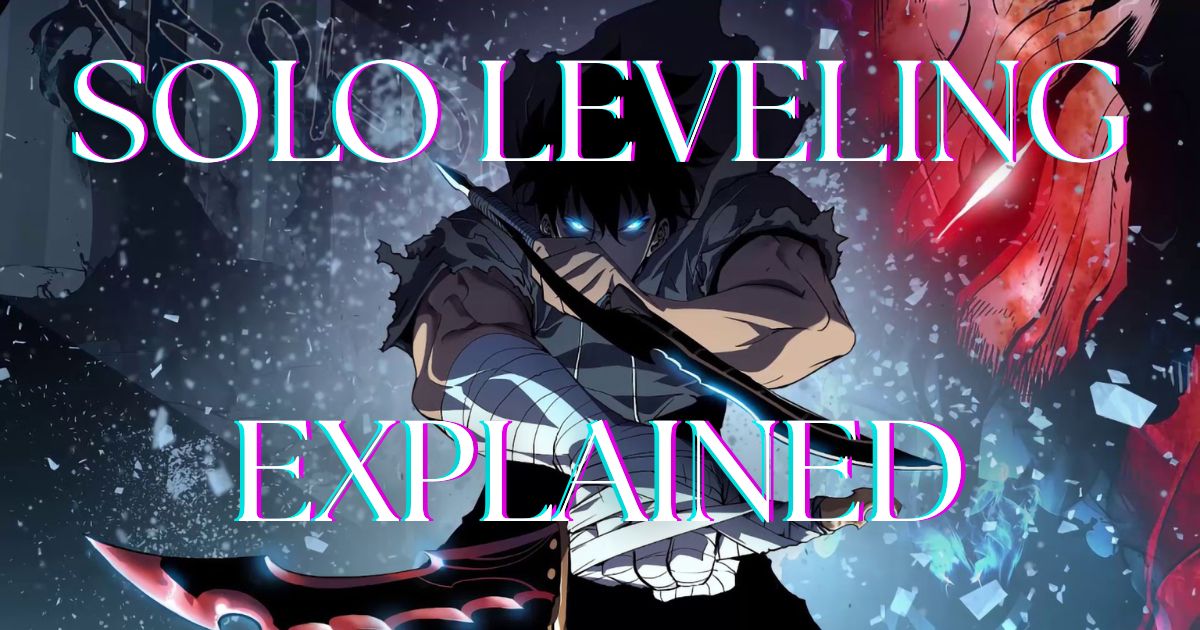
Solo Leveling is one of those rare titles that pulls in both longtime anime fans and people who normally do not touch action fantasy. It looks simple at first glance. A weak protagonist gets stronger. Monsters appear. Power escalates. But the reason Solo Leveling exploded in popularity goes much deeper than spectacle.
This article explains Solo Leveling from the ground up. It is written for U.S. audiences, especially viewers who are new to the series or new to anime in general.
Solo Leveling Explained
Solo leveling explained means understanding three things at once: the story structure, the power system, and the emotional appeal of progression.
At its core, Solo Leveling is about a world where humanity suddenly gains access to supernatural power through gates and dungeons. Hunters fight monsters to protect society. Most hunters are stuck at fixed power levels for life.
One person is not.
That exception changes everything.
Solo Leveling Anime Explained
The solo leveling anime explained version follows the same foundation as the original manhwa but presents it with cinematic pacing, heavy atmosphere, and sharp contrast between weakness and dominance.
The anime focuses on clarity. It makes the rules of the world easy to grasp early so viewers can enjoy watching those rules bend and eventually break as the story progresses.
For U.S. audiences, this makes Solo Leveling extremely accessible even without prior anime experience.
Solo Leveling Story Explained
The solo leveling story explained simply is this.
After mysterious gates connect Earth to monster-filled dungeons, humans awaken as hunters. These hunters are ranked by power and rarely change after awakening.
Sung Jin-Woo is the weakest hunter imaginable. He barely survives basic raids. After a brutal dungeon incident, he is granted access to a mysterious system that allows him to grow stronger through leveling, something no other hunter can do.
The story then follows his rise from expendable to unstoppable.
Solo Leveling Plot Explained
The solo leveling plot explained unfolds in clear phases.
Early on, the plot focuses on survival and secrecy. Jin-Woo grows quietly while the world underestimates him.
Midway through, the plot shifts toward dominance and confrontation as his power becomes impossible to hide.
Later arcs explore the consequences of that power, including larger threats, hidden rulers of the world, and Jin-Woo’s role in a conflict far bigger than Earth.
What Is Solo Leveling About
So, what is solo leveling about beyond action?
It is about agency.
In a world where most people are trapped by their limits, Jin-Woo is the only one allowed to change. That makes Solo Leveling deeply satisfying for viewers who enjoy stories about growth, self-improvement, and breaking ceilings imposed by society or fate.
Is Solo Leveling Worth Watching
Is solo leveling worth watching depends on expectations.
If you want slow character introspection and philosophical dialogue, this is not that kind of show.
If you want clear progression, powerful payoff, and a story that rewards patience with dominance, Solo Leveling delivers consistently.
For many U.S. viewers, especially those coming from gaming or superhero media, it is an easy entry point into anime.
Why Solo Leveling Is Popular
Why solo leveling is popular comes down to clarity and control.
The audience always understands:
What Jin-Woo can do
What he cannot do yet
What it will take to get stronger
There is no confusion about stakes. Progress is visible. Power feels earned even when it becomes overwhelming.
That transparency creates addictive momentum.
Solo Leveling Meaning
The solo leveling meaning is not subtle.
It is a power fantasy, but one rooted in effort. Jin-Woo does not awaken as special. He becomes special through suffering, repetition, and discipline.
The story resonates because it mirrors real-world growth fantasies in a clean, rule-based way.
Solo Leveling Themes
The core solo leveling themes include:
Growth through effort
Isolation caused by power
Responsibility that follows strength
Fear of becoming inhuman while protecting humanity
As Jin-Woo grows stronger, he also grows lonelier. The story does not fully ignore this cost, even if it prioritizes momentum over introspection.
Solo Leveling Power System
The solo leveling power system is one of the biggest reasons for its success.
Unlike many anime, power is not vague. Stats, skills, levels, and cooldowns exist. This gives viewers a concrete sense of progress and limits.
Power feels measurable, which makes victories feel earned.
Solo Leveling System Explained
The solo leveling system explained functions like a hidden game interface visible only to Jin-Woo.
It assigns quests, rewards him with items and skills, and punishes failure. The system forces Jin-Woo into danger constantly, ensuring that growth is tied to risk.
This design keeps tension high even when Jin-Woo becomes strong.
Solo Leveling Leveling System
The solo leveling leveling system allows Jin-Woo to gain stats through combat, much like a role-playing game.
Every fight matters. Every dungeon contributes. Unlike other hunters, Jin-Woo is never capped.
This single mechanic drives the entire narrative forward.
How Solo Leveling Powers Work
How solo leveling powers work is straightforward.
Hunters awaken with fixed abilities.
Jin-Woo alone can improve indefinitely.
Skills unlock through progression and survival.
Later abilities reshape the battlefield entirely.
The simplicity of this structure is intentional and effective.
Sung Jin-Woo Explained
Sung Jin-Woo explained is the heart of the story.
He starts as powerless, afraid, and desperate. Over time, he becomes calm, strategic, and dominant. His personality shifts alongside his power.
Unlike many protagonists, Jin-Woo does not seek admiration. He seeks control.
Solo Leveling Main Character
As the solo leveling main character, Jin-Woo carries the entire narrative.
Side characters exist primarily to contrast his growth. Their limitations highlight his uniqueness.
This singular focus is why the series moves so quickly and cleanly.
Why Sung Jin-Woo Is Overpowered
Why Sung Jin-Woo is overpowered is not an accident.
The story is designed to explore what happens when one individual breaks the system entirely. Power escalation is not a flaw. It is the point.
The tension shifts from “can he survive” to “what does his existence change.”
Shadow Monarch Explained
The shadow monarch explained arc reveals the true source of Jin-Woo’s power.
Without spoilers, the Shadow Monarch represents control over death, loyalty, and inevitability. This role transforms Jin-Woo from powerful hunter into a central figure in a cosmic conflict.
Solo Leveling Monarchs Explained
The solo leveling monarchs explained concept introduces entities that govern destruction, creation, and balance.
These beings elevate the story from dungeon crawling to world-scale stakes.
Solo Leveling Shadow Army
The solo leveling shadow army is Jin-Woo’s most iconic ability.
He raises fallen enemies as loyal shadows. This ability symbolizes his dominance and isolation. He is never truly alone, yet increasingly separated from humanity.
Solo Leveling Gates Explained
Solo leveling gates explained are portals connecting Earth to other realms.
They appear randomly, forcing humanity to adapt. Gates are both opportunity and catastrophe, shaping society around hunters and raids.
Solo Leveling Hunters Ranks
The solo leveling hunters ranks system classifies hunters from weakest to strongest.
This ranking system provides constant comparison and makes Jin-Woo’s rise visually and narratively satisfying.
Solo Leveling Dungeon System
The solo leveling dungeon system reinforces repetition and risk.
Dungeons are not puzzles. They are trials. Survival equals progress.
This keeps pacing tight and stakes clear.
Solo Leveling vs Isekai
Solo leveling vs isekai is a common comparison.
Solo Leveling is not an isekai. Jin-Woo does not leave his world. Instead, the world changes around him.
This makes the story feel more grounded despite its fantasy elements.
Solo Leveling vs Typical Shonen
In solo leveling vs typical shonen, the biggest difference is focus.
There is no ensemble growth. There are no prolonged training arcs for side characters. Progress is centralized and efficient.
This appeals strongly to viewers who prefer momentum over variety.
Why Solo Leveling Feels Different
Why solo leveling feels different comes down to restraint.
It does not overexplain emotions.
It does not interrupt progression unnecessarily.
It trusts the system to carry engagement.
That confidence shows.
Solo Leveling Anime vs Manhwa
The solo leveling anime vs manhwa comparison matters for newcomers.
The anime closely follows the source material while adjusting pacing for episodic viewing. Visuals emphasize atmosphere and impact rather than internal monologue.
Anime-only viewers do not need prior knowledge.
Solo Leveling Adaptation Explained
The solo leveling adaptation explained approach prioritizes accessibility.
It explains systems clearly, avoids lore overload early, and escalates naturally.
This makes it beginner friendly without dumbing things down.
Differences Between Solo Leveling Anime and Manhwa
The differences between solo leveling anime and manhwa are mostly stylistic.
The core story remains intact. Changes focus on presentation, not meaning.
Is Solo Leveling Confusing
Is solo leveling confusing is a common concern.
No. The rules are simple, consistent, and reinforced repeatedly.
Is Solo Leveling Beginner Friendly
Is solo leveling beginner friendly is a clear yes.
Its structure mirrors familiar video game logic, making it easy for U.S. audiences to follow.
Do You Need to Read the Manhwa First
Do you need to read the manhwa first?
No. The anime stands on its own.
Reading the manhwa adds depth, but it is not required to enjoy or understand the story.
Final Thoughts on Solo Leveling Explained
Solo Leveling succeeds because it knows exactly what it is.
It is not trying to be everything. It is delivering a clear, controlled power fantasy built on progression, consequence, and spectacle.
That clarity is why it works.